
You Can't Spell COMEDY without ME
7 Days Until An August Night of Comedy!!

I occasionally hear a comedian cringe at the idea of talking about comedy — like there’s nothing more uninteresting and unfunny than talking about what’s funny. Even E.B. White had a go at the topic with this (approximate) quote: "Analyzing humor is like dissecting a frog. Few people are interested and the frog dies of it."
Comedy is either funny or it’s not, and this reminds me of jazz musicians who don’t like to categorize music because music is music and that’s it. Like when Duke Ellington said, “There are simply two kinds of music, good music and the other kind."
I get the point, but the best comedians and the best musicians know a shitload about their disciplines — the history, the variations, the practitioners, the process of getting good — and I suspect they’ve actually spent countless hours talking about their craft. They probably just need it to be with the right people at the right time and place. In other words, they likely don’t want to talk to you (or me, Bill Gullo) about it.
I’m not a comedian, and to be honest, I’m terrible at telling a joke, but at risk of being horribly unfunny, I’m gonna share some thoughts and experiences about comedy in hopes that your visit to Storytellers Social Club today is worthwhile.
(I’m also inviting you to something very funny on Thursday August 6th in Brooklyn, NY!! Details below.)
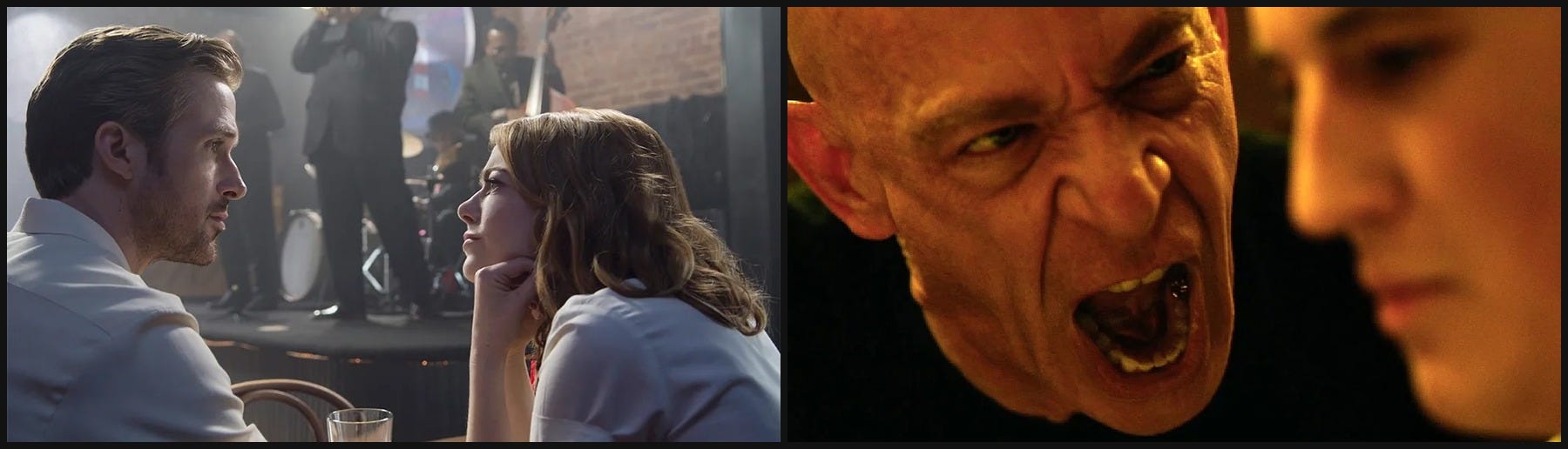
As for learning about jazz, an art form invented by Black Americans in the late 19th century, a music steeped in African rhythms and culture, you can always pull up La La Land and listen to a Caucasian Ryan Gosling mansplain jazz to a wide-eyed Caucasian Emma Stone in Caucasian director Damion Chazelle’s Oscar-winning film. Or you can pull up Chazelle’s first feature Whiplash in which Oscar-winning, Caucasian J.K. Simmons shouts about ‘Jazz Greats’ to Caucasian Miles Teller.
You can’t spell COMEDY without ME.
So three and a half million years ago in New Orleans, I made a short film with a friend called Picked Okra. We co-wrote it, he directed/shot/edited it, and I…acted in it? If you can call it acting since Pickled Okra was largely a silent film with great cinematography, music, and sound design.
The story followed a guy (me, Bill Gullo) wandering the streets of New Orleans during Mardi Gras. There was a certain Buster Keaton quality to the character as he stumbled and bumped his way around the city. He eventually finds himself in the middle of a convenient store robbery, and makes a clumsy attempt to thwart the robber. The film eventually ends with him dancing in the street to brass brand music. (FUN FACT: Mr T. has a cameo in the film because while we were filming he rolled by in the back of a yellow taxi throwing Mr. T comic books at anyone in his path.)
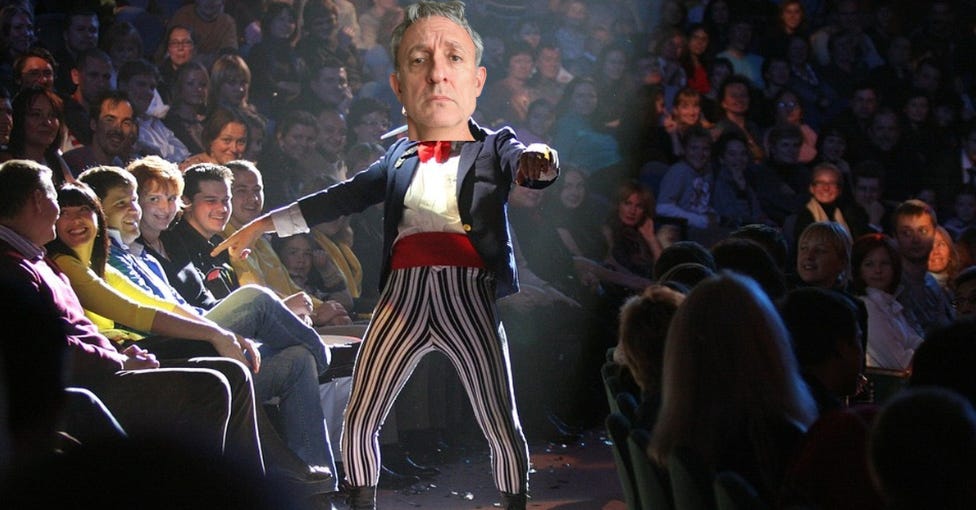
That short film was my first time doing anything like this, so at the premiere, I sat awfully low in my seat. The lights went down, and the film started, and a minute or so in, the audience laughed. It’s important to note here that the film was a comedy so we wanted them to laugh. I don’t know if my body sat up straight, but my brain certainly did. I’m the youngest in my family so I’m no stranger to wanting to make people laugh, but this was different. These were strangers. And the comedy was crafted, edited, and polished in hopes of making an audience laugh. And it worked. This was an amazing feeling.
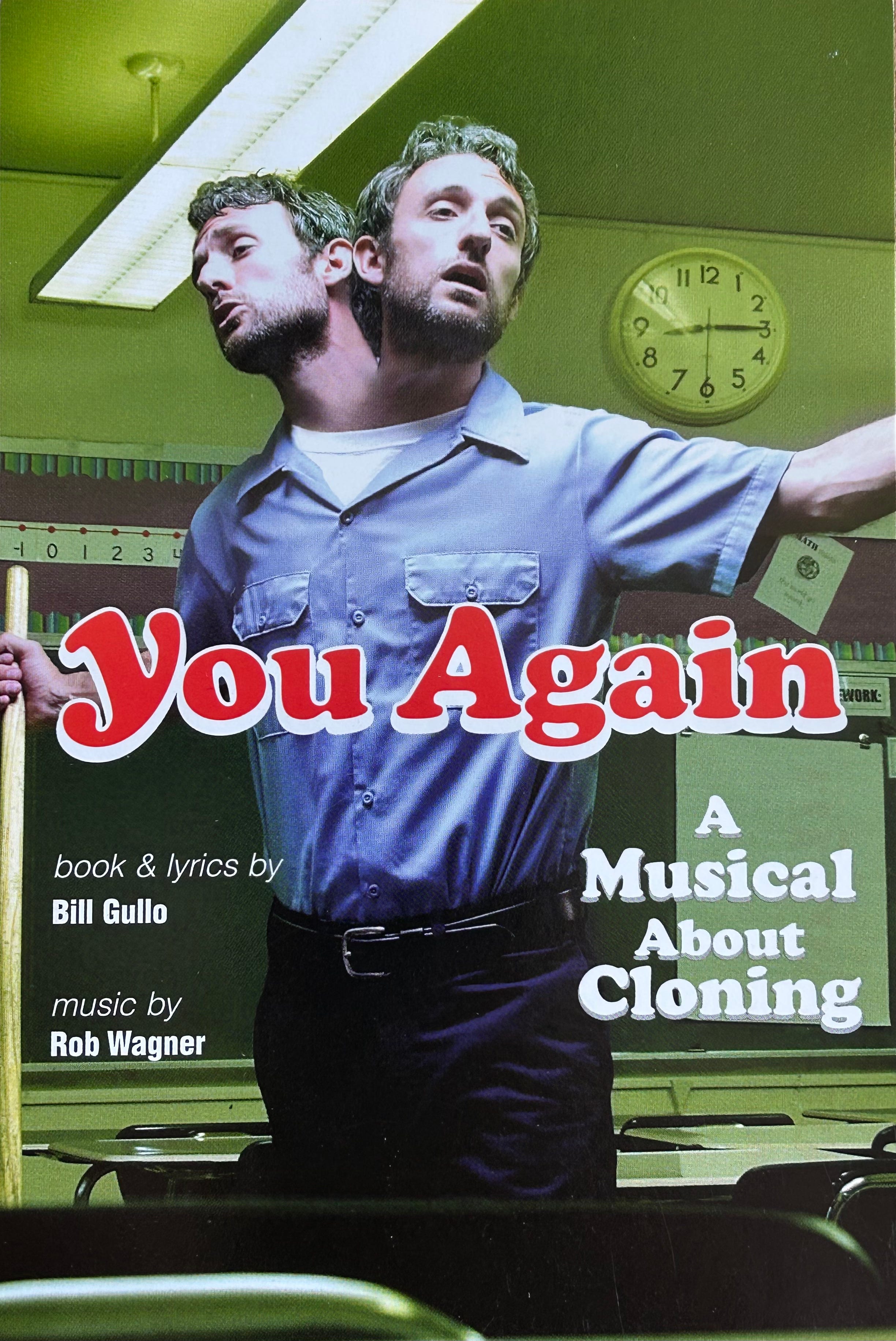
The same was true when I premiered my favorite project ever: You Again, a Musical about Cloning at the NY Fringe Festival. Every laugh from the audience brought me some combination of relief that my work didn’t suck and joy at giving people what I now see as a gift. Sitting in the back of the theater, it all seemed so impossibly fun and positive. I could see how people could get hooked on comedy because the immediacy of the laugh (or lack of it) is so satisfying.
Around the same time, I went to a comedy show that featured Patton Oswald and Triumph the Insult Comic Dog. At one point, Triumph introduced Jared Fogle, the affable Subway Guy who would soon be convicted of child sex tourism and possession of child pornography. After pulling loosely-wrapped Subway sandwiches from a pair of his giant jeans, Jared hurled them into the crowd as if they were NBA swag or a rock star’s guitar pick. Unfortunately, the sandwiches became unwrapped midair resulting in shredded lettuce and deli meat raining upon the crowd. I laughed so hard it hurt.
Somewhere between then and now, I was struck by an honest-to-goodness aphorism:
Making someone laugh is to make them lose control — in the best possible way.
And that my friends is what I’m hoping will happen on next Thursday, August 6th — not the shredded lettuce but the laughter part — as Storytellers Social Club hosts our first comedy experience: AN AUGUST NIGHT OF COMEDY.
Unlike our ongoing meetups which are exclusive to actively-working creative professionals, our showcases are open to the public. In other words: you’re all invited! Drop me a line and I’ll send you an RSVP link.
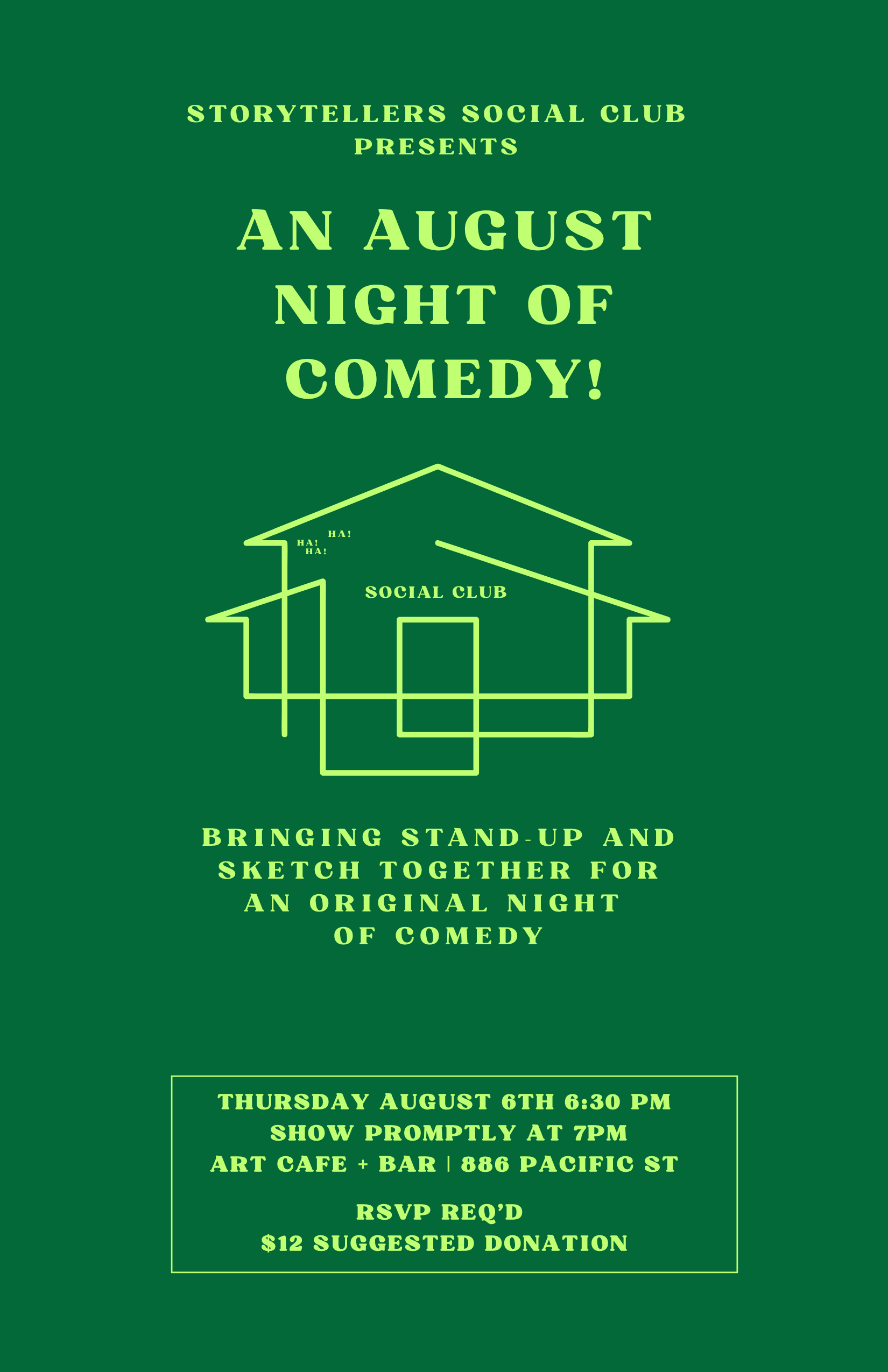
If you follow what I do here, you might know that I love pushing disciplines at each other as a way to lean into the eclectic nature of the creative community. For this event, I’m curating a combination of stand up comics and sketch comedy oddballs to create an experience unlike any other. I’m working on a surprise or two as well.
Speaking of Surprises (ie Writing Tips)
I want to extract some unfunny storytelling tips from all this talk of comedy. Here goes: to make people laugh you must surprise them. It’s pretty much math; if you see it coming, you won’t laugh. Similarly, all great stories contain elements of surprise, and no, it doesn’t have to involve a shower curtain being torn aside. Surprises can exist in your character’s choices or world view, the style of your dialogue, and even the length of your sentences.
So when you’re imagining, developing, writing and revising your stories, look for opportunities to surprise your audience. Hopefully you’ll even surprise yourself during your creative process. That’s always a good feeling. This week, as you read or watch stories, take note of the surprises that are baked into the narrative. It’ll help you drink this creative Kool Aid.
And Another Thing! (ie More Writing Tips)
You know the old cliche: it’s funny ‘cuz it’s true? Well, turns out that’s true for comedy and for storytelling writ large. To make people laugh, those surprises often include some universal truth. In some cases, it’s a truth we may not have noticed before, like when George Carlin described a house as a place to keep your stuff while you go out and accumulate more stuff.
Great stories are also grounded in universal truths of course. A story’s worlds and themes and characters remind us of our own lives and that connection unlocks emotion — laughter or tears or some other bodily fluid. So, please, make the time and effort to identify, explore and invest in universal human experiences when you write.
Now that I’ve sucked all the life out of the topic of comedy, I will leave you with a reminder to join me and other Social Clubbers for an AUGUST NIGHT OF COMEDY on August 6th.
See you soon.
Bg
P.S. Work with me, Bill Gullo!
I haven’t mentioned it in a while, but I’m an active story consultant for writers of all kinds — screenwriters, fiction writers, even a graphic novelist or two. Testimonials here. Drop me a line if you’re working on something and want to explore possibilities.
Must’ve been a great feeling have people laugh at your movie when they’re supposed to.